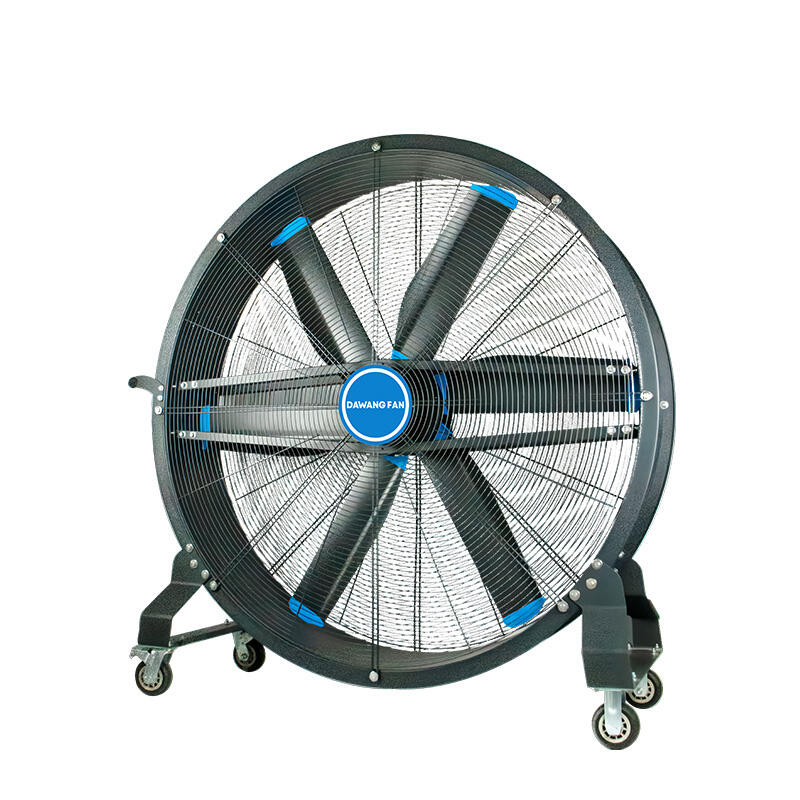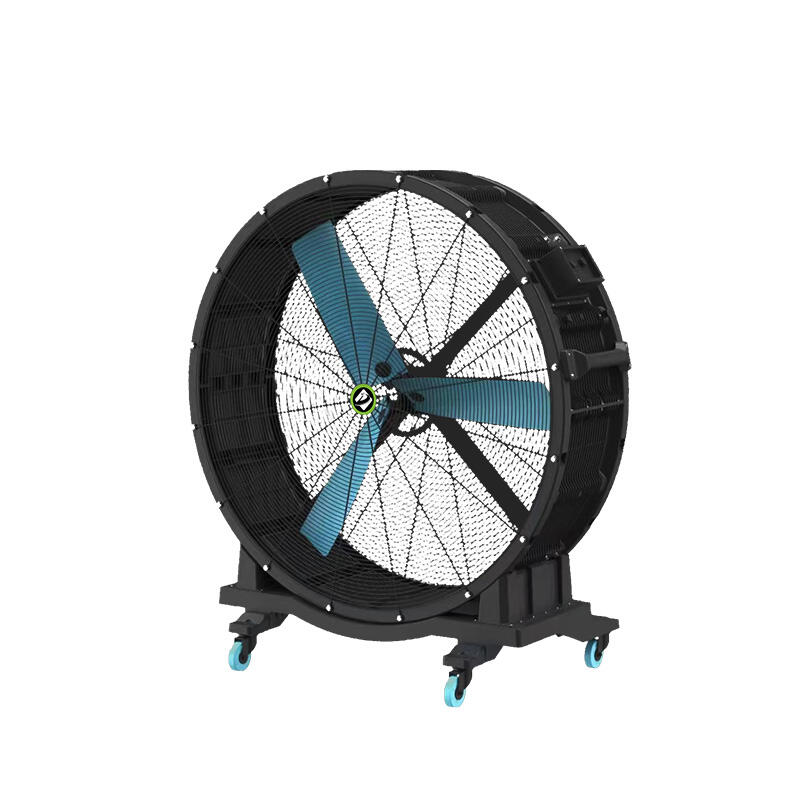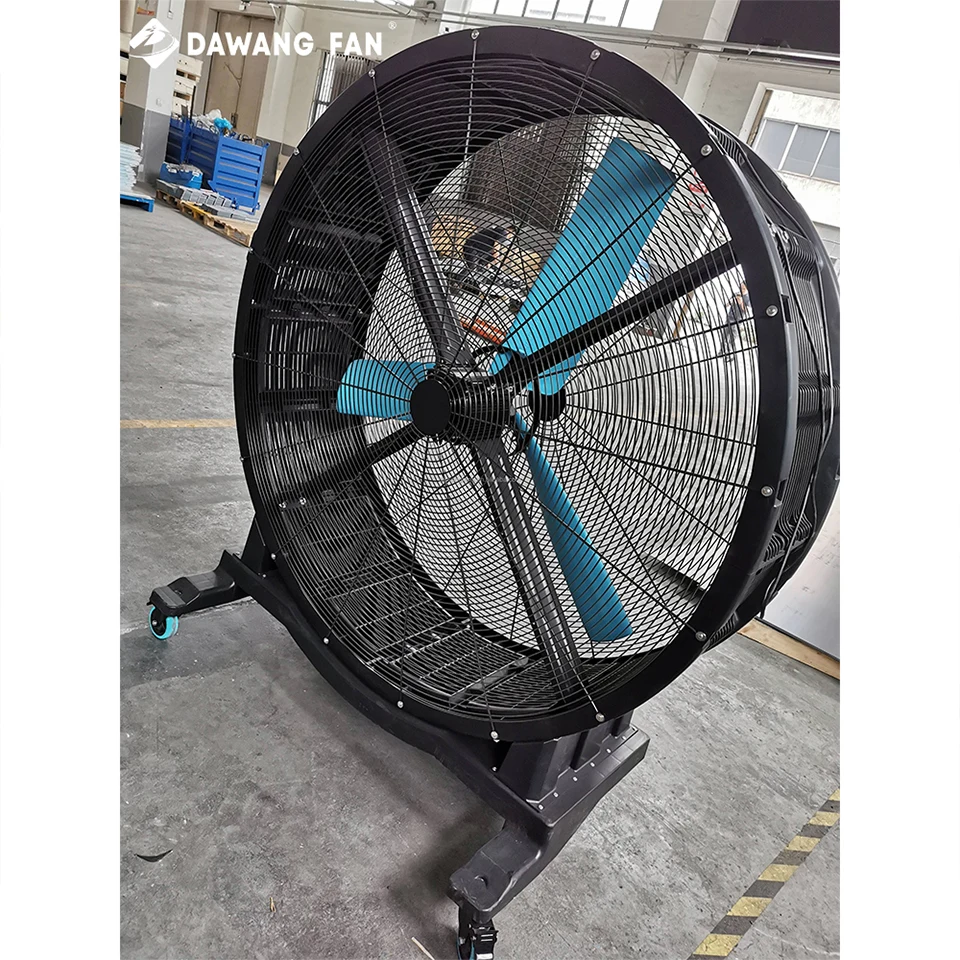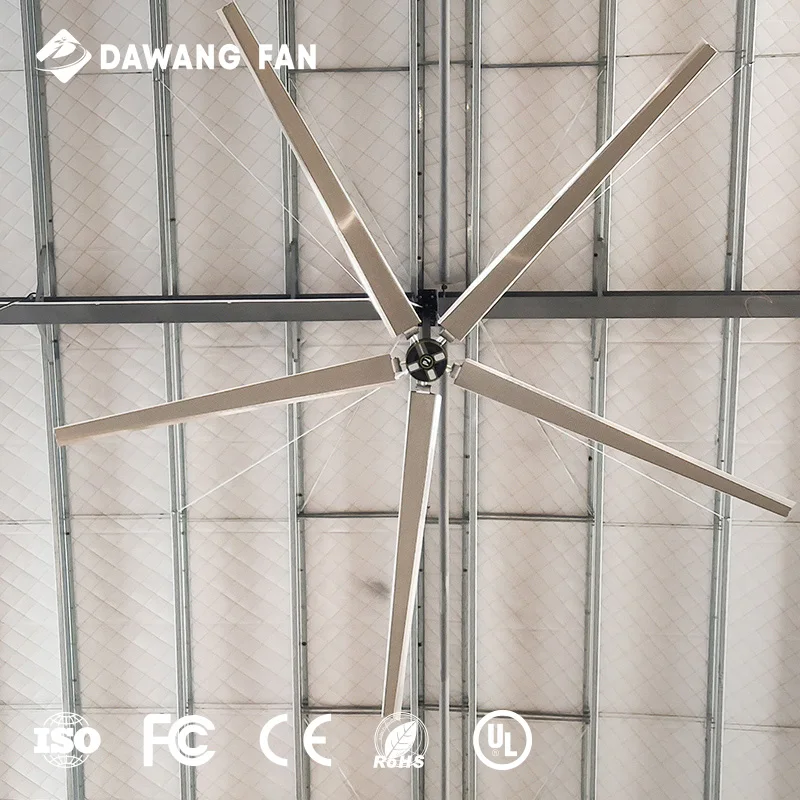
The low speed big industrial fan, most commonly embodied by the HVLS (High-Volume, Low-Speed) fan, operates on a fundamentally different and superior principle than traditional high-speed fans. Instead of chopping at the air to create a disruptive and localized blast of wind, HVLS fans rotate slowly, typically at RPMs below 100, using their massive diameter (ranging from 7 to 24 feet) to gently engage and propel a huge column of air. This action creates a wide, horizontal floor jet that travels continuously throughout the entire space, providing consistent cooling and ventilation to everyone in the area. The low speed is the key to its efficiency and comfort. It minimizes energy consumption, as the power required to turn a large blade slowly is far less than that needed to spin a small blade extremely fast to move an equivalent amount of air. It also eliminates the unpleasant, noisy buffeting and wind shear effects associated with small high-speed fans, making the work environment much more comfortable and allowing for paperwork and other light tasks to be performed without disruption. The slow movement of the large air mass is exceptionally effective at breaking up thermal stratification, the layers of hot and cool air that naturally form in high-ceilinged buildings. By mixing these layers, the fan creates a uniform temperature from floor to ceiling, which dramatically improves heating efficiency in the winter and reduces cooling costs in the summer. This combination of massive coverage, superior comfort, and significant energy savings makes the low speed big industrial fan the optimal choice for nearly any large space, including warehouses, manufacturing plants, gyms, and airports. For a detailed explanation of how low-speed technology can benefit your specific application, we invite you to contact our engineering consultants.

08
Sep
19
Sep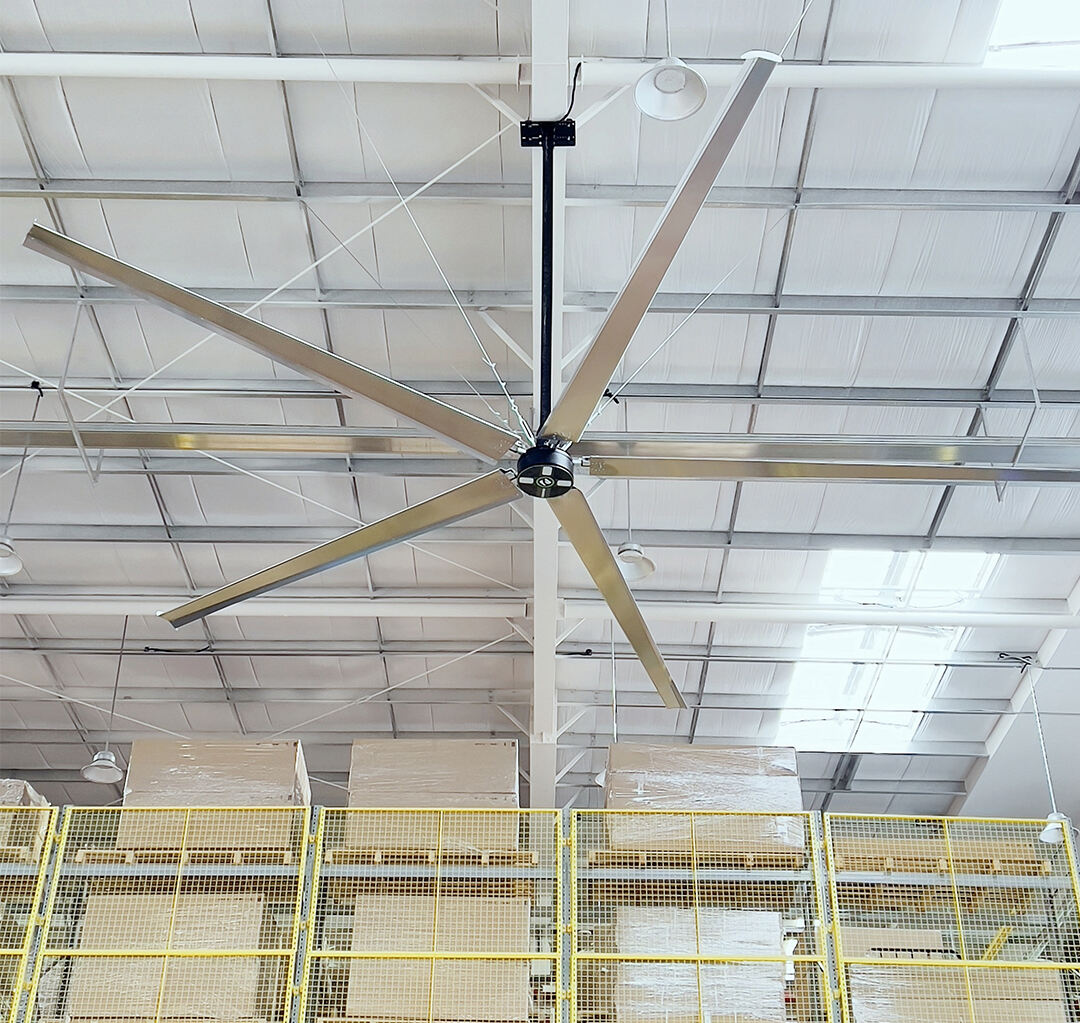
28
Oct
21
Oct
 EN
EN